Nantahala Farm in Topton, North Carolina
Nigerian Dwarf Goats, Brabanter/Dominique/Ameraucana Chickens, Rabbits
Specializing in Rare and Endangered Farm Animals
Nantahala Farm

General Chicken and Egg Information
Dominique Chickens
Brabanter Chickens
Ameraucana Chickens
Farm and Health Books for Sale

DOMINIQUE CHICKENS


Dominique Hen and Rooster Dominique Chicks & Chickens for Sale


We sell Dominique chicks and chickens. We do not ship day. Chicks and chickens have to be picked up in person. Hens cost more than roosters. Hens that are just beginning to lay eggs cost the most. Contact us for pricing.

America's First Chicken


The exact origin of the Dominique chicken is not known, but they probably came from European chicken breeds and later in its refinement, some Asian breeds. The name of "Dominique" probably came from birds imported from the French colony of Saint-Domingue (Haiti). Early names of these poultry include Blue Spotted Hen, Old Grey Hen, Dominico, Dominic, and Dominicker.

Dominique fowl was common on American farms as early as the 1820s, where they were kept as a dual-purpose chicken. In 1871 the New York Poultry Society decided that only rose combed Dominiques would be the breed standard. The single combed Dominiques were folded into the barred Plymouth Rock breed- a larger breed common in New England which were created by crossing large, single comb Dominiques with Java chickens. In 1874 the Dominique breed was officially admitted to the American Poultry Association's Standard of Perfection.

The Dominique was popular until the 1920s but then interest decreased. The breed survived during the Great Depression of the 1930s because it was hardy and easy to keep. By the end of World War II, as the industrial poultry industry began to increase, the Dominique again declined. By 1970 there were only four known flocks owned by: Henry Miller, Edward Uber, Robert Henderson, and Carl Gallaher. From 1983 with reports on the breed by American Livestock Breeds Conservancy, until 2006, Dominiques steadily increased in numbers. As of 2007, they are once again beginning to decline.

Physical Characteristics


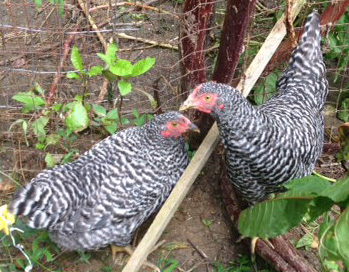
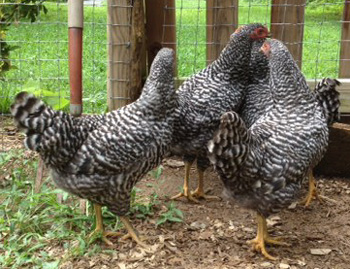
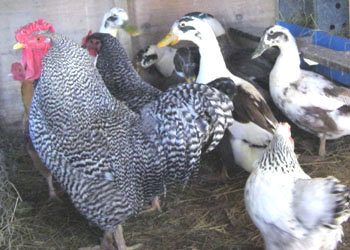
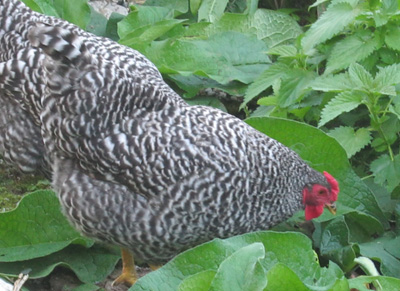
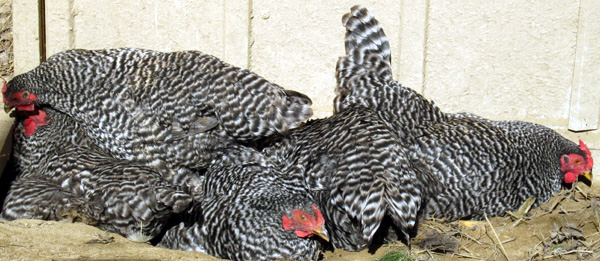
The Dominique chicken is a medium-sized black and white barred "cuckoo" patterned bird. This pattern makes the Dominique less visible to predators. Dominique fowl have a rose comb with a short upward curving spike. The roosters average seven pounds and the hens five pounds. The Dominique's tightly arranged plumage keeps the birds warm in winter and provides plenty of feathers for pillows and featherbeds. Dominiques carry their heads high up on well-arched necks. Their body is broad and full with long and full tail feathers that are held the highest of the American breeds.

Good for Meat and Eggs


Brown EggsThe Dominques are a dual-purpose breed (meat and eggs), but are mostly kept for being good egg producers. Hens average 230-275 small- to medium-sized brown eggs per year. Dominiques are self sufficient and will scratch for their own food, making them less expensive to maintain than many of today's specialized breeds of chickens.

A book about Dominique's is available: "The American Dominique: A Treatise for the Fancier" by Mark A. Fields. There also is a Dominque group you can join Dominique Club of America.


Eggs for Sale: Eating and Hatching


Dominique Chicks We sell eggs for eating and hatching. We do not ship. You have to pick up your eggs. The Dominique hens lay light to medium brown eggs that are medium in size. We feed our chickens organic feed including flax to increase the omega-3. They have access to pasture during the day. At night we close them in the coop for safety.

Contact us for availability and price. If you bring your own egg carton, we give a reduced price.


Nantahala Farm in the Mountains of Western NC
Macon County (close to Cherokee County)
Topton, North Carolina 28781

828-321-9036 Please do not call after 8 pm.
orders@healthtreasures.com

Near Tennessee, Georgia, Alabama and South Carolina borders.
20 miles east of Andrews, NC (30 minutes)
35 miles east of Murphy, NC (45 minutes)
85 miles west of Asheville, NC (1 hour, 45 minutes)
94 miles south of Knoxville, TN (2 hours, 20 minutes)
125 miles east of Chattanooga, TN (2 hours, 30 minutes)
145 miles northwest of Greenville, SC (2 hours, 50 minutes)
153 miles north of Atlanta, GA (3 hours)

Home   |  Goat  |  Chicken  |  Rabbit  |  Farm and Health Books  |  Location Map 

All rights reserved. ©2008